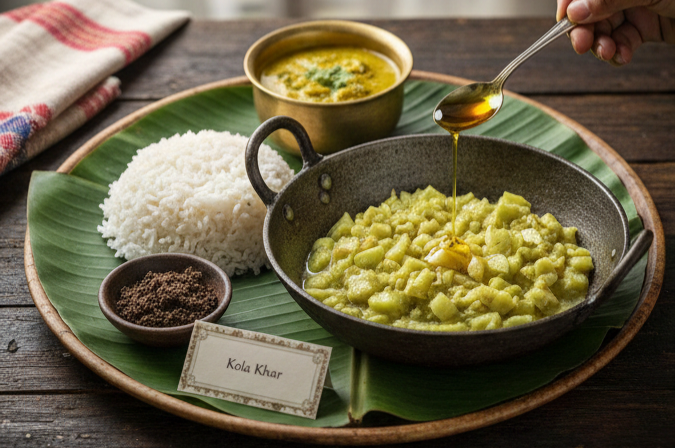
In the heart of Northeast India, specifically in the lush valleys of Assam, a meal is never truly complete without the presence of Khar. Often referred to as the soul of Assamese cuisine, Khar is not just a dish; it is a unique culinary identity. If you are looking to recreate the authentic taste of an Assamese household, this guide will walk you through the history, the science, and the step-by-step process of making Omita Khar (Raw Papaya Khar).
Summary Box: Quick Recipe Overview
- Primary Ingredient: Raw Papaya (Omita)
- Defining Element: Kola Khar (Alkaline liquid from banana peel ash)
- Taste Profile: Subtle, earthy, and alkaline.
- Health Benefit: Excellent for digestion; usually served as the first course.
- Key Rule: Never add turmeric (Haldi) to a Khar dish.
1. What Exactly is Khar?
Khar is an alkaline-based preparation that is unique to Assamese culture. The word “Khar” refers to two things: the liquid ingredient extracted from the ashes of sun-dried banana peels, and the finished dish itself.
Historically, Khar was used as a substitute for salt during times when salt was a rare and expensive commodity in the region. Over centuries, it evolved into a beloved delicacy known for its ability to “cleanse” the palate and prepare the stomach for the heavier courses of a traditional lunch, such as Masor Tenga (sour fish curry).
2. The Secret Ingredient: How to Make “Kola Khar” at Home
To be truly authentic, you cannot simply use store-bought ingredients. The “Expert” way is to create the alkaline liquid yourself.

- Select the Banana: Use the peels of Bhim Kol (a seeded variety of banana native to Assam).
- Drying: Sun-dry the peels until they become completely black and brittle.
- Burning: Burn the dried peels to a crisp until they turn into greyish-black ash.
- Filtration: Place the ash in a bamboo filter (called a Khorisa) or a fine muslin cloth. Pour water slowly over the ash and collect the brown liquid that drips through. This liquid is your Kola Khar.
Note: If you cannot make this at home, a tiny pinch ofBaking Soda can be used as a modern substitute, though the smoky aroma will be missing.
3. Authentic Omita Khar Recipe
This version focuses on Raw Papaya, which is the most common and healthy version of the dish.
Ingredients Required
- Raw Papaya: 1 medium-sized (peeled and diced into small cubes)
- Kola Khar Liquid: 2-3 tablespoons (or 1/4 tsp Baking Soda)
- Garlic: 5-6 cloves (crushed)
- Green Chilies: 2-3 (slit)
- Mustard Oil: 2 tablespoons (Crucial for the authentic pungent aroma)
- Panch Phoron: 1/2 tsp (Optional, for tempering)
- Salt: To taste
- Water: 1 to 2 cups
Cooking Instructions
- Heat the Oil: In a heavy-bottomed pan (traditionally a cast-iron Karahi), heat the mustard oil until it reaches the smoking point.
- The Tempering: Add the crushed garlic and green chilies. Sauté until the garlic turns golden brown.
- Add Papaya: Toss in the diced raw papaya cubes. Stir-fry on medium heat for 3-5 minutes until the edges of the papaya look slightly translucent.
- The Alkaline Magic: Pour in the Kola Khar liquid (or sprinkle the baking soda). You will notice a slight fizz or change in texture—this is the alkaline reacting with the fibers of the papaya, softening it.
- Simmering: Add salt and water. Cover the pan with a lid and let it simmer on low heat for 10-15 minutes. The papaya should become soft enough to be mashed easily with the back of a spoon.
- Final Touch: Once the water has mostly evaporated and the dish has a semi-thick consistency, turn off the heat. Drizzle one teaspoon of raw mustard oil over the top for that signature Assamese “kick.”
4. Why We Don’t Use Turmeric
A common mistake beginners make is adding turmeric. In Assamese cooking, the alkaline nature of Khar reacts with turmeric, turning the dish an unappetizing dark red or deep brown color. To keep the dish looking authentic and light, always omit the turmeric.
5. Variations to Explore
Once you master the Papaya Khar, you can try these popular variations:
- Mati Mahor Khar: Made with whole black gram (Urad Dal).
- Xewa Khar: Made with the tender core of the banana stem.
- Fish Head Khar: Adding a fried Rohu or Katla fish head to the papaya mix for a rich, savory flavor.
6. Frequently Asked Questions (FAQ)
Q1: Is Khar healthy to eat every day?
Yes, in moderation. Because it is alkaline, it helps neutralize stomach acidity and acts as a natural digestive aid.
Q2: Can I use any banana peel?
While Bhim Kol is preferred for its high potassium content and flavor, other varieties can be used, but the “alkaline strength” may vary.
Q3: What should I serve with Khar?
Khar is strictly a lunch dish. It should be served with steaming hot Joha rice and perhaps a side of Khorisa (bamboo shoot) or a simple dal.
Conclusion
Making Khar at home is a way to connect with the ancient traditions of Assam. Whether you are an Assamese living away from home or a food enthusiast looking to try something new, this recipe brings a piece of “Aai Axom” (Mother Assam) to your kitchen.